
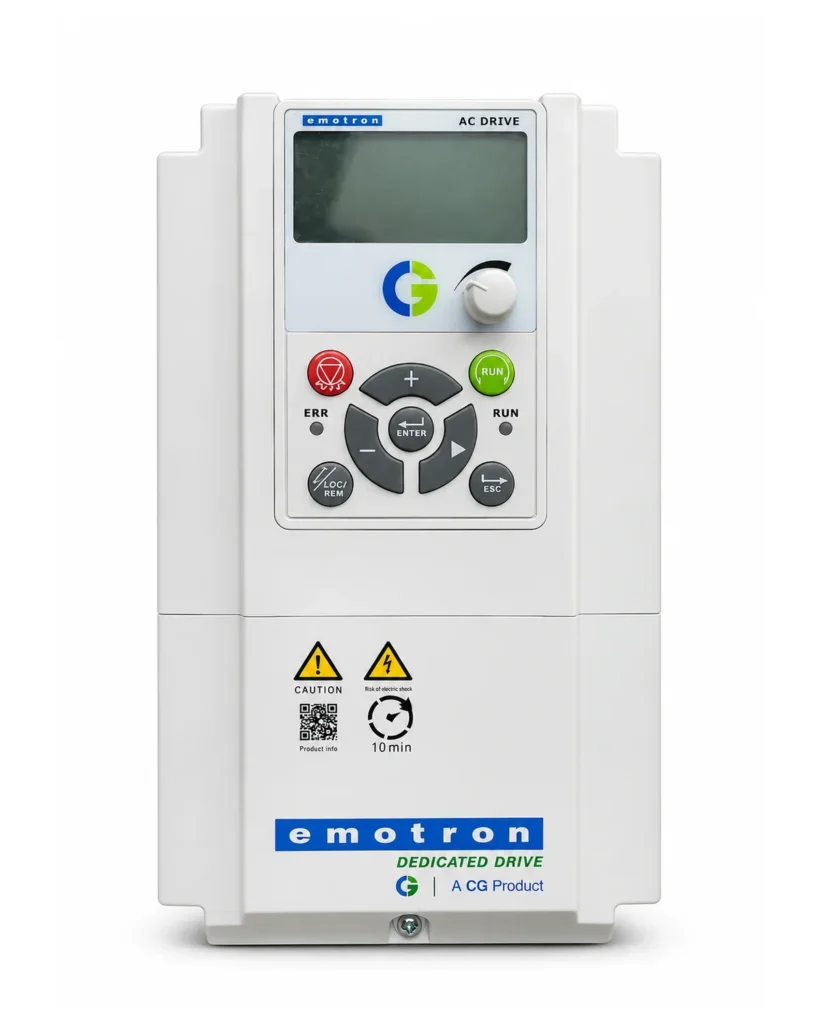
What a solar VFD actually does
A solar VFD takes DC from the array, tracks the maximum power point, and rebuilds it as a variable-frequency three-phase output for the motor. It is not a grid-tie inverter: the load is your pump or mill, not the meter.
Why the motor needs variable frequency
A motor started direct-on-line draws six to seven times its rated current. A VFD ramps frequency from zero, so starting current stays close to running current. That means less stress on the winding, no water hammer in a pump line, and a soft stop instead of a slam.
How solar and grid share the drive
Above roughly 586 V DC the drive runs on the array alone. As the sun drops and the DC bus falls, it blends three-phase 415 V grid power automatically. There is no manual changeover, and no battery is needed for daytime running.
What to size first
Start with the motor nameplate, not the panel count. The array is sized from the drive: a 20HP unit wants about 22.5 kWp inside a 900 V DC limit. Undersizing the array is the most common mistake.
When it is the wrong choice
If your load is a resistive heater, a VFD adds nothing. If the motor runs at one fixed speed all day and grid power is reliable, a plain starter may do.
We supply and install CG solar VFDs from 3HP to 30HP in Lucknow. Send the motor nameplate and we will size the drive and array before you order.